
Apartment Building Insurance in Texas: A Practical Coverage Checklist
A practical Texas coverage review for apartment owners and property managers, from building values and liability to rent loss, flood, and contracts.
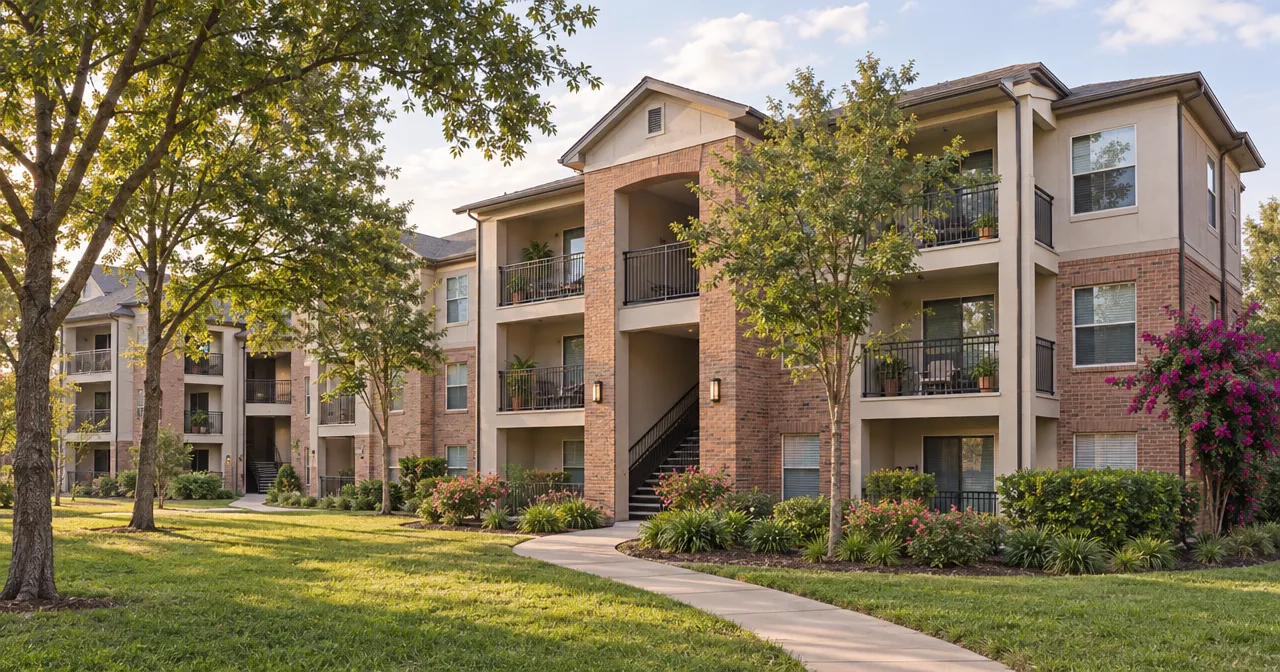
A multifamily property is both a building and a business. One fire can damage several units, interrupt rent, and raise questions about who insures appliances, common areas, and tenants’ belongings. A wind claim can turn on the roof settlement terms and deductible, while a plumbing incident can reveal that “water damage” means different things in different policies. The right review starts with the actual property—not a generic label such as “landlord insurance.”
For apartment owners and property managers in Texas, habitational insurance is the commercial coverage framework for these overlapping exposures. The questions below are designed for owners of small apartment buildings, larger multifamily communities, and portfolios of rental properties. They are especially useful when you buy a building, renew a policy, add units, change managers, or start a major renovation.
Start with the building, the owner, and the occupants
An owner-occupied home, a single-family rental, a fourplex, and a 60-unit apartment community do not present identical insurance exposures. Before comparing quotes, write down the ownership entity, each property address, the number of buildings and units, occupancy, construction details, roof age, renovations, and any amenities such as pools, gates, or fitness rooms. Tell the advisor if units are vacant, used for short-term stays, undergoing construction, or occupied by a commercial tenant; these details may affect eligibility, exclusions, or the form offered.
Confirm who needs coverage for what. The property-owning entity generally needs coverage for its building, landlord-owned fixtures and equipment, rental income exposure, and premises liability. A separate management company may need its own liability and professional coverage for the services it provides. Tenants need coverage for their possessions and personal liability: the Texas Department of Insurance (TDI) explains that a landlord’s policy does not cover a renter’s personal items. Requiring renters insurance in a lease does not replace the owner’s building or liability policy.
A small rental owner may hear terms such as lessors risk, rental property insurance, or apartment building insurance. These are useful starting points, not guarantees that two policies insure the same risks. Ask for the coverage form, schedules, endorsements, exclusions, and deductibles—not just a premium and a product name.
Insure the building to rebuild, not merely to satisfy a loan
A lender’s required limit may not equal the cost to rebuild an apartment building. Check the insured value for each structure, including attached or separate offices, laundry rooms, carports, and other improvements. Ask how the policy treats fencing, signs, outdoor equipment, and landscaping, which may have separate limits or exclusions. Update the schedule after adding units or acquiring another property; do not assume a new address is automatically included.
The distinction between replacement cost and actual cash value matters. Replacement cost is based on current repair or replacement costs subject to policy conditions; actual cash value reflects depreciation. A roof endorsement can also use different settlement terms from the rest of the building. TDI’s commercial property insurance guide explains these valuation methods, common exclusions, and optional coverages. Review the declarations and endorsements to see how your particular roof, siding, and other components will be settled.
For an older building, ask whether ordinance or law coverage is appropriate. A covered fire might require upgrades to current codes during reconstruction even when the damaged portion was built under older standards. Standard property limits may not fully address those added costs. Also ask about equipment breakdown for central HVAC, boilers, elevators, or other shared systems, and whether building-owned refrigerators, stoves, washers, and office equipment are counted in the property values.
Finally, compare deductibles in dollars. If a policy applies a wind deductible of 2% to a building insured for $2 million, the deductible would be $40,000 for a qualifying loss—not $2,000. That is an illustrative calculation, not a quote or a statement about any carrier’s terms. Confirm which building value the percentage applies to, whether a named-storm deductible is separate, and whether different deductibles apply by location.
Account for rent lost while units are repaired
Physical repairs are only part of recovery. If a covered fire makes six units uninhabitable, the owner may lose rent while repairs proceed, even as the mortgage, taxes, and other expenses continue. Ask about loss of rents, business income, or rental-value coverage, depending on the policy form. Verify the covered causes of loss, any waiting period, maximum period of restoration, limits, and whether extra expense coverage could help manage a temporary office or other covered recovery costs. Coverage generally depends on the policy’s specific trigger; lost rent by itself is not automatically an insured loss.
Use the current rent roll and actual leases to estimate the exposure. For example, six units renting for $1,400 per month would produce $8,400 in monthly scheduled rent before considering vacancies or lease terms. If a realistic reconstruction takes months, a small income limit may be exhausted before the building reopens. Keep rent rolls, leases, expense records, and repair documentation where you can access them after a loss.
Do not assume a separate flood policy will replace lost rent. The National Flood Insurance Program’s commercial coverage explanation lists business interruption and loss of use among losses its commercial flood forms do not cover. If flood-related rental income is a major concern, ask what, if any, separate private-market options are available and inspect their terms rather than assuming they match ordinary property business-income coverage.
Separate wind, flood, backup, and pipe leaks
Texas properties can face different water and weather scenarios, and the source of damage changes the coverage question:
- Wind and hail: Check whether they are included, excluded, or placed with a separate insurer. Review roof settlement language and wind or named-storm deductibles.
- Flood or storm surge: Standard commercial property insurance generally excludes flooding. Examine a separate flood policy’s building and contents limits, deductibles, and applicable waiting period.
- Sewer or drain backup: Ask whether an endorsement is available and what sublimit applies. Do not assume that a backup has the same treatment as rising surface water.
- Sudden plumbing leak: Ask how the form handles resulting water damage, access to repair a pipe, and exclusions for ongoing seepage, deterioration, or maintenance. The answer depends on the wording and the facts.
Location matters. A Spring property and one near Galveston Bay may require different wind arrangements. For eligible coastal properties, the Texas Windstorm Insurance Association outlines its commercial coverage and eligibility rules, including geographic, declination, and construction-certification requirements. Do not assume every coastal building qualifies or that TWIA covers flooding; wind and flood are separate questions.
Flood exposure also deserves a review for properties well beyond the coast. Check a building’s site conditions, lower-level equipment, previous water incidents, and lender requirements. A flood-zone designation is not a complete substitute for evaluating the location and the policy. For a multifamily building, ask how the insurer classifies the structure and which flood form and limits apply; do not borrow a coverage figure meant for a different type of building.
Treat liability as a property-operation question
General liability for an apartment property addresses certain third-party bodily injury and property damage allegations, subject to the policy’s exclusions and limits. Think beyond a hypothetical slip in the lobby: consider stairs with poor lighting, a loose handrail, a delivery driver on site, a shared pool, a fallen tree, or damage associated with maintenance work. Document inspections, repairs, and incident reports so a claim can be evaluated against reliable records.
Ask whether each location is scheduled and whether amenities, vacant buildings, renovation work, or particular operations need disclosure. Check per-occurrence and aggregate limits; a commercial umbrella or excess policy may provide additional capacity above eligible underlying liability policies, but its conditions and exclusions still matter. Review the deductible or self-insured retention, if any, rather than judging a liability quote by the headline limit alone.
Property management insurance is not identical to the owner’s property policy. If a management firm handles leasing, bookkeeping, vendor selection, or tenant data, ask what liability, professional errors-and-omissions, crime, or cyber protection the firm carries and what the owner’s policy does or does not cover. Name the correct legal entities on each policy. If a contract calls for one party to be an additional insured, have the advisor review the actual endorsement and the relevant contract language; a certificate alone cannot manufacture coverage.
Check employees, vehicles, vendors, and contracts
Once a property operation hires a maintenance technician, porter, or leasing employee, workplace injury becomes a separate issue from visitor liability. In Texas, most private employers may choose whether to carry workers’ compensation, but that does not make employee injuries or contract requirements disappear. Ask about the choices, notices, and implications for your particular operation rather than treating a general liability policy as workers’ comp.
If the business owns a maintenance truck or uses a vehicle to move supplies between properties, review commercial auto insurance. If an employee uses a personal car for a work errand or the company rents a vehicle, ask about hired and non-owned auto liability; it addresses the business’s potential liability and is not a substitute for insuring damage to every vehicle. Vehicle use and ownership should match the policy description.
Contractors matter too. Before roofers, plumbers, or landscapers start work, compare their insurance against the written agreement: insured entity, policy dates, relevant operations, liability limits, and any requested additional-insured or waiver terms. Keep certificates current and request endorsements where the contract requires them. TDI’s certificate-of-insurance FAQ makes clear that a certificate cannot say more than the underlying policy provides. Discuss contract wording with qualified counsel when responsibilities are unclear; insurance review does not replace legal advice.
A major renovation deserves a separate conversation. Replacing a few fixtures in an occupied unit is not the same as taking an entire building offline for structural work. Ask whether the existing property policy continues to cover the building, whether builder’s risk is needed for work in progress, and who insures materials before installation. Notify the advisor before occupancy or operations change, not after a claim.
A practical renewal checklist for Texas apartment owners
Bring this list to a business insurance policy review rather than waiting until the renewal deadline:
- Are all ownership entities, management entities, buildings, units, and locations correctly listed?
- Are building limits based on a current rebuilding estimate rather than purchase price or loan balance?
- How are roofs settled, and what would each wind, hail, named-storm, or other deductible mean in dollars?
- Do property limits include owner-owned appliances, shared equipment, outbuildings, and other site features as needed?
- Are ordinance or law, equipment breakdown, water backup, and renovation exposures addressed where appropriate?
- How much rental income could be lost after a covered event, and for how long might restoration take?
- Is flood covered under a separate policy, and which building form, limits, exclusions, and waiting period apply?
- Do liability limits and scheduled operations reflect pools, playgrounds, vacant units, and other property-specific risks?
- Who covers employees, company vehicles, management services, and vendor-related exposures?
- Do lender, lease, and vendor contracts request limits or endorsements the policies actually provide?
The answers may differ for an eight-unit property in Houston, a multifamily community in Dallas, and a coastal building in Corpus Christi. The goal is not to collect every available endorsement. It is to make the insured property, operating model, and policy language agree—then revisit the plan when your portfolio grows or your use of the property changes.
Review the protection behind your rental property
Solache Agency is based in Spring and serves property owners and businesses throughout Texas. Founder Diana Solache brings more than 20 years of insurance-industry experience to a process built around listening, explaining options, and reviewing coverage for gaps and overlaps. The team can discuss needs in English or Spanish. If you own or manage rental property, request a personalized review of the commercial protection for what you have worked hard to build.